Parsnip Countess F1 - Mr. Fothergill's Seeds
Pastinaca sativa
- Vitamin B6, C, and E
- High Yielding with Exceptional Flavour
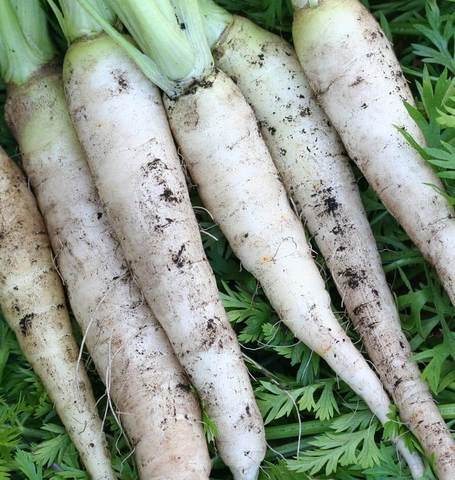
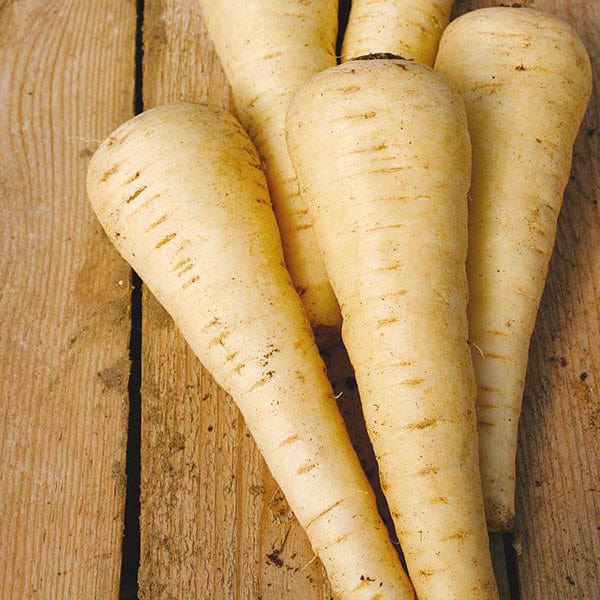
- Large, uniform, cone shaped roots and shallow crowns
- Very reliable, high in Vitamins and Potassium
- Harvest as required, store in dry sand.
A new maincrop variety producing very high yields with smooth skins. Very good tolerance to canker & cavity spot. Grown for its sweetness, they are wonderful roasted, fried, boiled or mashed.
Parsnips are easy to grow and delicious fried, roasted or stewed. Stands in the ground over the winter and freezes well.
Approx. 200 seeds
Outdoors: sow thinly February-May, where they are to crop, 1.5cm (½") deep, directly into finely-prepared, light, fertile soil, which has already been watered. Allow 40cm (16") between rows. Early sowings may benefit from cloche protection. Seedlings usually appear in 14-32 days. Thin plants to 20cm (8") apart. Replace any dislodged soil. Water well until plants are established. Leave roots in the ground until required, as they improve after exposure to autumn frosts. Harvest: October-February.
Bred to help reduce plant disease naturally: If you want to garden organically or use less chemicals, these modern disease-resistant varieties will help. Greatly reducing the need for chemicals, they give tasty crops from the garden.
Original: $2.92
-65%$2.92
$1.02Product Information
Product Information
Shipping & Returns
Shipping & Returns
Description
Pastinaca sativa
- Vitamin B6, C, and E
- High Yielding with Exceptional Flavour
- Large, uniform, cone shaped roots and shallow crowns
- Very reliable, high in Vitamins and Potassium
- Harvest as required, store in dry sand.
A new maincrop variety producing very high yields with smooth skins. Very good tolerance to canker & cavity spot. Grown for its sweetness, they are wonderful roasted, fried, boiled or mashed.
Parsnips are easy to grow and delicious fried, roasted or stewed. Stands in the ground over the winter and freezes well.
Approx. 200 seeds
Outdoors: sow thinly February-May, where they are to crop, 1.5cm (½") deep, directly into finely-prepared, light, fertile soil, which has already been watered. Allow 40cm (16") between rows. Early sowings may benefit from cloche protection. Seedlings usually appear in 14-32 days. Thin plants to 20cm (8") apart. Replace any dislodged soil. Water well until plants are established. Leave roots in the ground until required, as they improve after exposure to autumn frosts. Harvest: October-February.
Bred to help reduce plant disease naturally: If you want to garden organically or use less chemicals, these modern disease-resistant varieties will help. Greatly reducing the need for chemicals, they give tasty crops from the garden.